

How to treat schizoid personality disorder requires a layered, compassionate approach that integrates relational psychotherapy, depth psychology, and body-centered techniques to help people move from defensive detachment toward fuller contact, feeling, and agency. Treatment aims to reframe emotional withdrawal not as moral failing but as an adaptive survival strategy, then gradually restore capacity for affect tolerance, bodily sensation, and intimate contact through careful containment, paced interventions, and targeted somatic methods.
Before diving into practical methods, establish a shared framework: this is not about forcing sociability but about enlarging choice — increasing options for connection, self-expression, and vitality while preserving necessary boundaries. The following sections combine clinical theory and concrete session-level techniques based on Reichian and bioenergetic principles, object-relations thinking, and contemporary psychodynamic and trauma-informed practice.
Transition: Begin with a clear, clinically useful overview of what schizoid personality disorder looks like in therapy, its common presentations, and the central problems treatment must solve.
Clinical overview: What treatment must solve
Core presentation and survival strategy
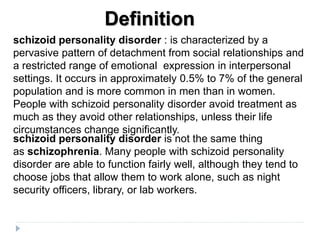
People with schizoid personality disorder commonly present with a pervasive pattern of detachment from social relationships, restricted range of emotional expression, and preference for solitary activities. Clinically this often appears as apparent emotional flatness, minimal disclosure, aloofness, and a consistent tendency to retreat when intimacy or affective demands increase. From a psychodynamic and Reichian perspective, this detachment is best understood as a defensive organization — a way of containing unbearable arousal or relational injury.
Primary therapeutic problems to address
Treatment must solve several entwined problems: reduce chronic isolation without breaching safety; restore access to affect and bodily sensation; scaffold the capacity for interpersonal reciprocity; and help the client develop a tolerable internal world that supports engagement. Secondary problems often include alexithymia (difficulty naming feelings), low affective resonance, shame about vulnerability, and impaired pleasure. Practical therapy therefore targets affect regulation, somatic grounding, relational reciprocity, and gradual exposure to closeness.
Functional goals that guide clinical choice
Set goals that are behaviorally and experientially concrete: increase tolerated time in reciprocal conversations, identify and label affective states, tolerate close proximity with a trusted other for short durations, reduce automatic withdrawal in the face of perceived criticism, and enhance capacity for bodily self-awareness. These goals translate naturally into session interventions and measurement.
Transition: Assessment must be specific and multimodal — combining clinical interview, psychodynamic formulation, body-centered observation, and brief standardized measures to track change.
Assessment and formulation: Multimodal tools for individualizing treatment
Diagnostic clarity and differential considerations
A thorough assessment differentiates schizoid personality organization from avoidant or schizotypal presentations, depression with social withdrawal, autism spectrum conditions, and trauma-related dissociation. Key diagnostic features include longstanding preference for solitude, limited desire for close relationships, and emotional constriction that predates situational stressors. Explore developmental history, attachment patterns, early caregiving, and any history of abuse or neglect that may have shaped the defensive posture.
Body-centered assessment
Observe posture, facial expressivity, breath pattern, muscle tone, and movement quality. Look for characteristic signs of chronic character armoring: shallow, upper-chest breathing; constricted shoulders and neck; flattened facial musculature; limited gesture; and a tendency to minimize contact with the therapist’s field (avoiding eye contact, extreme stillness). Document baseline somatic reactivity to minimal stimuli — presence or absence of startle, autonomic activation, and spontaneous affective expression.
Psychodynamic and relational formulation
Construct a formulation that links early object relations (caregiver availability, mirroring failures, emotional neglect) with the development of a protective, withdrawn stance. Identify internalized object representations (e.g., caregivers as cold, unavailable, or intrusive) that shape expectations of others. Highlight a central defensive organization: detachment maintained by affect constriction, cognitive distancing, intellectualization, and bodily contraction.
Measurement and outcome tracking
Use brief validated measures to track change: symptom scales (e.g., personality disorder inventories), alexithymia scales, social functioning indices, and sessional ratings of comfort with contact and emotional expression. Add observational checklists for somatic markers (breath depth, facial animation) so progress is visible in both narrative and body metrics.
Transition: From assessment move to a clear, staged treatment plan that respects safety and the client’s pace while progressively challenging defensive structures.
Therapeutic goals and phased treatment plan
Phase 1 — Safety, containment, and psychoeducation
Initial work creates containment: a reliable frame, predictable session boundaries, and explicit agreements about pacing. Psychoeducation normalizes the defensive function of withdrawal — framing it as adaptation to early relational risk. Teach simple somatic resourcing techniques early (grounding, breath awareness) so the client learns to manage increased affect without retreating. Aim to increase tolerable contact with the therapist by small increments (e.g., 5–10 minutes of focused engagement).
Phase 2 — Somatic re-connection and affect emergence
Once containment is established, introduce body-centered interventions to access tethered affect. Work targets progressive release of armoring through breath work, progressive muscular release, gentle movement, and localized sensing exercises. Encourage affect naming and linking bodily sensations to emotions. Emphasis is on safe activation rather than cathartic flooding; pacing is crucial so the client experiences mastery rather than shame.
Phase 3 — Relational experimentation and integration
Begin graded exposures to interpersonal reciprocity: role-play, interpersonal prompts, safe disclosures, and later, group psychotherapy or social skills work. Use the therapeutic relationship as a real-time laboratory to practice tolerating vulnerability, responding to disappointment, and receiving attuned feedback. Integration means connecting bodily experience, affect awareness, and relational behavior into a coherent sense of self.
Phase 4 — Consolidation and autonomy
Support consolidation through relapse prevention, strengthening social supports, and cultivating meaningful activities that reinforce identity beyond withdrawal. Work focuses on sustaining regulatory strategies, maintaining physical practices, and planning for inevitable setbacks without collapsing into the old defensive patterns.
Transition: The therapeutic stance and specific interventions are the engines of change; explicating both psychodynamic techniques and body-centered methods clarifies how to operationalize the phases above.
Core interventions: Relational, psychodynamic, and body-centered
The holding therapeutic stance
A therapist’s stance is the single most potent intervention. Maintain consistent containment, calm affect, and unconditional curiosity. Use measured warmth without pressure. Make hypotheses about underlying fear (e.g., fear of engulfment, annihilation) rather than moralizing about withdrawal. Reflect clients’ affect gently: “You seem to be keeping a distance right now; that might be a way to stay safe.” Naming the defensive function validates rather than shames.
Psychodynamic techniques
Use interpretation to link present withdrawal to historical relational patterns, but avoid over-intellectualizing. schizoid character structure to moments when affect is present or emerging. Use gently framed confrontations when withdrawal repeats in-session, focusing on process rather than character. Interpret transference as a source of data: note when the client expects unavailability or coldness from the therapist and explore those expectations experientially.
Bioenergetic and somatic methods
Grounded in Lowen and Reich, bioenergetic approaches focus on freeing chronic muscular tension to restore energy flow and affect. Techniques include guided breathing (diaphragmatic, low-belly breathing), progressive muscular release, grounding exercises (feet on floor, weighted sensation), gentle shaking or pacing, and expressive sighs to mobilize emotion. Emphasize tracking internal sensation with curious, nonjudgmental attention. For many schizoid clients, even small invitations to engage the body (a slowed breath, a tensing-release of the jaw) can catalyze felt experience without overwhelming them.
Vegetotherapy and contact exercises
Vegetotherapy techniques (sensory-focused work on chest, throat, pelvic regions) can be adapted to the client’s tolerance. Begin with non-invasive contact (therapist’s voice modulation, safe touch only with explicit consent and clear boundaries) and progress to self-contact exercises (hand on chest, soft self-holding) to increase interoception. Use contact barriers and boundaries to help clients experience closeness as negotiated and safe.
Expressive and creative modalities
Art, music, and movement therapies provide alternate pathways to affect and connection that bypass verbal defenses. Tasks such as clay-sculpting, rhythmic drumming, or structured movement sequences invite spontaneous expression. Offer these modalities not as tests but as optional experiments to discover what awakens feeling without demanding narrative coherence.
Group therapy and social skill scaffolding
Small, well-led groups can be powerful but must be introduced late and slowly. Groups offer corrective emotional experiences: safe witnessing, mirrored affect, and tolerable mismatch. Begin with psychoeducational groups that teach assertiveness and reciprocity, then move to process groups with clear norms, predictable structure, and a therapist attuned to containment. Use role-play to practice real-world interactions with graded exposure.
Transition: Concrete, replicable session-level techniques translate these interventions into practice: here are scripts and exercises clinicians can implement within sessions.
Session-level techniques: Scripts, exercises, and pacing
Initial minutes: grounding and calibration
Start with short, simple grounding: invite the client to notice feet on the floor and breathe into the belly for three slow cycles. Use neutral tone and slow pacing. Calibration: ask a single low-demand question (“How tolerable does it feel right now, on a 0–10 scale?”). This anchors affect without eliciting extensive disclosure.
Mid-session: sensing-to-symbolize sequence
Use a sensing-to-symbolize scaffold: 1) Bring attention to a bodily sensation (tightness in chest, hollow stomach); 2) Ask for descriptive words (warmth, pressure); 3) Invite affect labeling if present (sad, numb, guarded); 4) Link to memory or relational expectation only if the client can tolerate it. This sequence helps build the pathway from sensation to emotion to narrative.
Managing silence effectively
Silence is a therapeutic resource. When withdrawal deepens into silence, resist filling the void. Offer brief observational statements (“You’ve gone quiet; maybe that feels safer.”), then reintroduce grounding and resourcing. Use silence as a moment to allow spontaneous affect to surface rather than a deficit requiring rescue.
Containment when affect escalates
If somatic activation intensifies (rapid breathing, tremor, tears), immediately return to containment: slow exhalations together, guided hand-on-leg resourcing if acceptable, and clear validation. Avoid pushing for catharsis. Once physiological regulation is restored, process the experience slowly, linking body-state to meaning in small steps.
Home assignments and embodied practices
Prescribe low-demand, daily somatic practices: 5 minutes of grounding, short breathing routines, gentle movement, or a simple expressive art task. Frame assignments as experiments, not obligations. Use session review to reinforce skills, celebrate small shifts in capacity, and adjust pacing.
Transition: Anticipate predictable obstacles — resistance, splitting, and safety concerns — and plan interventions to keep work tolerable and ethically sound.
Common obstacles and clinical management
Resistance and compliance masquerading as cooperation
Schizoid defenses often present as superficially compliant but emotionally distant behavior. Attend to process: note incongruence between content and affect. Use curiosity to explore the function of compliance (“It feels safer to say that, is that right?”). Offer alternatives for small experiments rather than confronting compliance directly.
Transference-countertransference patterns
Expect fantasies of neglect, intrusion, or indifference to arise in the transference. Clinicians may feel bored, rejected, or hyper-rescuing. Supervision should focus on these reactions: boredom may indicate under-attunement; rescue urges signal a missed opportunity to model containment. Maintain reflective practice and regular supervision to manage enactments.
Risk, comorbidity, and crisis management
Schizoid individuals may have comorbid depression, substance use, or self-harm risk when isolation deepens. Screen for suicidality and develop clear crisis plans. Coordinate with psychiatry when mood disorders or anxiety require pharmacologic intervention. Use body-centered grounding as an immediate crisis tool to reduce dissociative episodes.
Boundary issues and consent in somatic work
Somatic interventions raise special consent and boundary concerns. Always obtain explicit informed consent for touch or bodywork, discuss limits, and provide easy exit options. Use clear verbal check-ins and empower the client to name sensations or stop interventions at any time.
Transition: Consider the role of medication and adjunctive medical care, and how to manage comorbid conditions that frequently co-occur with schizoid presentations.
Medication, comorbidity, and adjunctive services
When medication is helpful
There is no medication that specifically treats core schizoid traits. However, SSRIs or other agents may help with comorbid depression, anxiety, or obsessive-compulsive symptoms. Antipsychotics are not routinely indicated unless frank psychotic symptoms appear. Medication decisions should support psychotherapy by reducing symptom burden that blocks participation.
Addressing trauma and dissociation
If early trauma underlies withdrawal, integrate trauma-informed care. Stabilization and grounding come before trauma processing. For dissociative symptoms, prioritize somatic stabilization and slow titration of exposure. Use phase-oriented trauma treatment models adjusted for the schizoid client’s pacing.
Coordination with other professionals
Work collaboratively with primary care, psychiatry, occupational therapists, and social supports. Vocational rehabilitation, peer-support groups, and structured activity programs provide contexts for practicing social engagement without therapeutic pressure.
Transition: Ethical and effective work requires therapist skill development, ongoing supervision, and a learning-oriented stance toward Reichian and bioenergetic methods.
Therapist training, supervision, and ethical practice
Competencies required
Clinicians should have training in psychodynamic or relational therapy, knowledge of personality organization, and supervised experience with somatic methods. Specific competencies include: pacing somatic intensification, recognizing character armor patterns, managing countertransference, and establishing boundaries for touch and movement-based interventions.
Supervision and reflective practice
Regular supervision is essential. Supervision should attend to enactments, therapist boredom or rescuing, and the therapist’s somatic responses. Use video or live supervision when learning hands-on somatic techniques. Engage in personal somatic practice to maintain embodied attunement.
Ethical considerations for bodywork
Maintain detailed informed consent processes for somatic interventions, document client preferences, and adhere to professional codes regarding dual relationships and touch. Keep detailed session notes that include somatic observations and risk assessments.
Transition: Define measurable markers of progress so both therapist and client can see incremental gains; close with a concise, actionable plan summarizing next steps for clinicians and clients.
Outcomes, progress markers, and concrete next steps
Observable markers of therapeutic progress
Track small but meaningful changes: increased duration of reciprocal conversation, more facial animation, improved breath depth, greater variety of affect words, willingness to try a somatic practice daily, and increased community engagement. Use both subjective reports and objective measures (sessional ratings, activity logs, group participation) to document change.
Short, medium, and long-term action steps
Short-term (first 1–3 months): establish containment, begin daily 5-minute grounding practice, and complete a comprehensive assessment that includes somatic observation. Medium-term (3–12 months): introduce regular somatic work (breath, progressive release), experiment with brief interpersonal exposures, and add psychoeducation about the defensive function of withdrawal. Long-term (12+ months): expand social experiments (groups, volunteer work), consolidate embodied practices into lifestyle routines, and develop relapse plans for periods of withdrawal.
For therapists: a practical starter script
“I notice you’ve drawn back a little when we talk about relationships. That could be a way you’ve kept yourself safe. If you’re willing, let’s try a short exercise: 2 minutes noticing where your feet touch the floor and one slow breath into your belly. After that, we’ll reflect together on what felt different.” This script models containment, low-demand somatic invitation, and collaborative reflection.
Final concise steps for clients and clinicians
- Begin with consistent, low-demand somatic practices (5 minutes/day).
- Establish clear therapy boundaries and a predictable frame to build safety.
- Track one small behavioral goal (one reciprocal conversation per week).
- Integrate body-centered exercises into sessions and at home to link sensation with feeling.
- Use graded exposure to intimacy in the safety of the therapeutic relationship before widening to groups or real-world relationships.
Treatment of schizoid personality disorder is a deliberate blend of containment, somatic reconnection, and relational experimentation. The goal is not to erase solitude but to transform it from automatic defense to freely chosen preference, supported by emotional flexibility and embodied presence. When clinicians combine psychodynamic insight with Reichian and bioenergetic methods, they provide clients with a pathway from survival silence toward an enriched life of felt contact, agency, and selective intimacy.